 Door-O-Matic
Garage Door Off Track Repair: The Hidden Damage Behind a Derailed Door
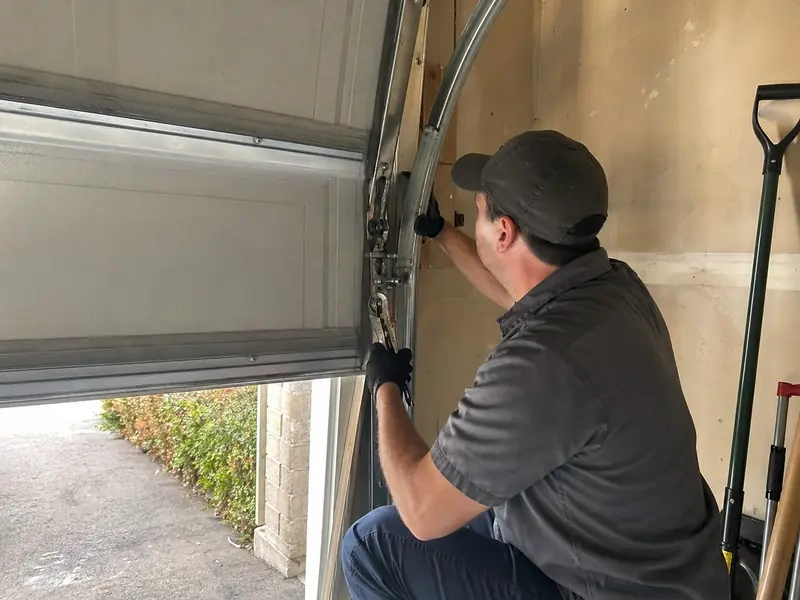
A garage door that suddenly hangs crooked, becomes stuck, or has rollers outside its tracks may have more damage than homeowners initially realize. While the visible problem might seem simple, garage door off track repair often requires examining several connected components to identify what caused the failure.
Tracks, rollers, hinges, cables, and supporting hardware work together to guide a garage door through its opening and closing cycles. When one component fails or shifts, other parts may experience additional stress.
For New Jersey homeowners dealing with this problem, Door-O-Matic Garage Door Services provides professional off-track garage door repair, including roller, track, and related hardware inspections.
What Actually Happens When a Garage Door Leaves Its Tracks?
Garage door tracks create a guided path for rollers as the door opens and closes. These components help keep the door properly positioned during movement.
When a roller moves outside its intended track, the door may lose alignment. One side can become higher than the other, or the entire door may stop moving.
However, a derailed roller is not always the original problem.
A damaged track, worn roller, loose bracket, or sudden impact may have caused the displacement.
Garage door manufacturer Clopay explains in its guide to stuck garage doors that off-track doors can become jammed or crooked. Attempting to force them back into position may cause additional damage or injury.
Understanding the cause is essential before restoring normal operation.
The Hidden Damage Behind an Off-Track Garage Door
When a garage door leaves its tracks, the visible roller displacement may only reveal part of the problem.
Several connected components should be evaluated before determining the appropriate repair.
Bent Tracks Can Change the Door's Travel Path
Garage door tracks must maintain the correct position and shape to guide the rollers.
An impact, shifted bracket, or damaged track section can interfere with that movement. Even when a roller is returned to its normal position, the door may continue experiencing resistance.
Door-O-Matic offers Bent or Damaged Track Repair to address track sections that have been pushed, twisted, or physically damaged.
Correcting the underlying track problem can be necessary to prevent repeated derailment.
Roller and Hinge Damage May Not Be Immediately Visible
Rollers help the door move through its tracks, while hinges connect the sections of many residential garage doors.
A worn bearing, bent roller stem, damaged hinge, or loose fastener can interfere with smooth movement.
These problems may develop gradually before a roller eventually leaves the track.
Professional inspection helps determine whether the affected hardware remains suitable for continued operation or requires replacement.
Cables and Supporting Hardware May Be Affected
An off-track garage door can also place unusual forces on cables and supporting components.
If the door becomes crooked, the lifting system may no longer maintain normal positioning.
The Door & Access Systems Manufacturers Association (DASMA) warns that garage door cables and spring-related components can operate under substantial tension.
For that reason, visible cable displacement or damage should be evaluated by trained professionals rather than adjusted by homeowners.
Why a Garage Door Comes Off Track in the First Place
Garage door derailment can result from several mechanical conditions.
One possible cause is a direct impact. A vehicle, equipment, or another object may strike the door or track and affect its alignment.
Repeated movement can also contribute to hardware wear over time.
Other possible causes include:
- Damaged or worn rollers
- Loose or shifted track brackets
- Bent track sections
- Cable or counterbalance problems
- Broken hinges or related hardware
- Existing door alignment problems
These conditions can produce similar symptoms, making professional diagnosis important.
The objective is not simply to identify where the roller left the track. It is to determine why the failure occurred.
Why Repositioning the Door Is Not Always a Complete Repair
A common misconception is that an off-track garage door only needs its rollers pushed back into place.
However, repositioning the rollers does not automatically correct damaged hardware, poor alignment, or an underlying mechanical problem.
For example, a bent track may continue restricting movement. A worn roller may also struggle to remain properly positioned.
That is why garage door off track repair should address both the visible displacement and the condition that caused it.
Door-O-Matic's Garage Door Track Repair & Adjustment focuses on restoring proper alignment, roller travel, and track hardware positioning.
The correct repair depends on the condition of the complete system.
What Professional Garage Door Off Track Repair Involves
Professional service begins with evaluating the condition and position of the door.
A technician can inspect the rollers, tracks, hinges, brackets, cables, and other components connected to the movement system.
Depending on the findings, the repair may involve repositioning the door, replacing damaged components, correcting track alignment, or addressing related mechanical issues.
Once the necessary repairs are completed, the technician can check the door's balance and movement.
Testing helps confirm that the rollers follow their intended path and that the door opens and closes without unusual resistance.
This process is especially important when the derailment resulted from an impact or an existing hardware failure.
Why You Should Stop Operating an Off-Track Garage Door
An off-track door may be unstable because its components are no longer moving along their intended path.
Continuing to use the opener can create additional stress on rollers, tracks, cables, and other hardware.
Homeowners should avoid pulling on a crooked door, attempting to reconnect displaced rollers, or loosening brackets.
Clopay specifically recommends stopping operation and contacting a trained technician when a garage door comes off its tracks.
If the door is visibly displaced, keep people, pets, and vehicles away from its path until the system has been professionally inspected.
Preventing Another Off-Track Garage Door Problem
Not every derailment can be prevented, particularly when accidental impacts occur.
However, routine maintenance can help identify developing problems before they affect door movement.
Changes in sound, alignment, or roller travel may indicate components that require attention.
DASMA recommends regular garage door safety checks and professional maintenance to support smooth operation.
Homeowners can also explore Door-O-Matic's Preventive Maintenance & Tune-Ups for inspections of moving components, hardware, balance, and overall garage door performance.
Preventive care can help identify wear before it contributes to a larger mechanical failure.
Restoring Safe and Reliable Garage Door Movement
A garage door that has come off its tracks should not be treated as a simple alignment problem without further evaluation.
Bent tracks, damaged rollers, worn hinges, cable problems, and displaced hardware can all contribute to the failure.
Professional garage door off track repair helps identify the underlying cause and determine which components need attention.
By addressing the complete system, homeowners can restore dependable movement while reducing the risk of the same mechanical problem returning.
If your garage door is crooked, stuck, or showing rollers outside their normal track position, avoid forcing it to operate.
Contact Door-O-Matic Garage Door Services to schedule professional garage door off track repair in New Jersey and have the tracks, rollers, cables, and related hardware properly inspected.
Have a question about your garage door?
Talk to an expertMore from the Door-O-Matic blog
Garage door roller replacement: nylon vs. steel and why proper fit matters
Planning garage door roller replacement? Compare nylon and steel rollers, bearing quality, and proper fit for smoother garage door operation in New Jersey.
Emergency garage door repair after a storm: power loss, damage, and safe access
Need emergency garage door repair after a storm? Learn how to spot power loss, storm damage, and unsafe movement before requesting service in New Jersey.