 Door-O-Matic
Garage Door Cable Repair: What Happens When a Cable Becomes Loose or Breaks?
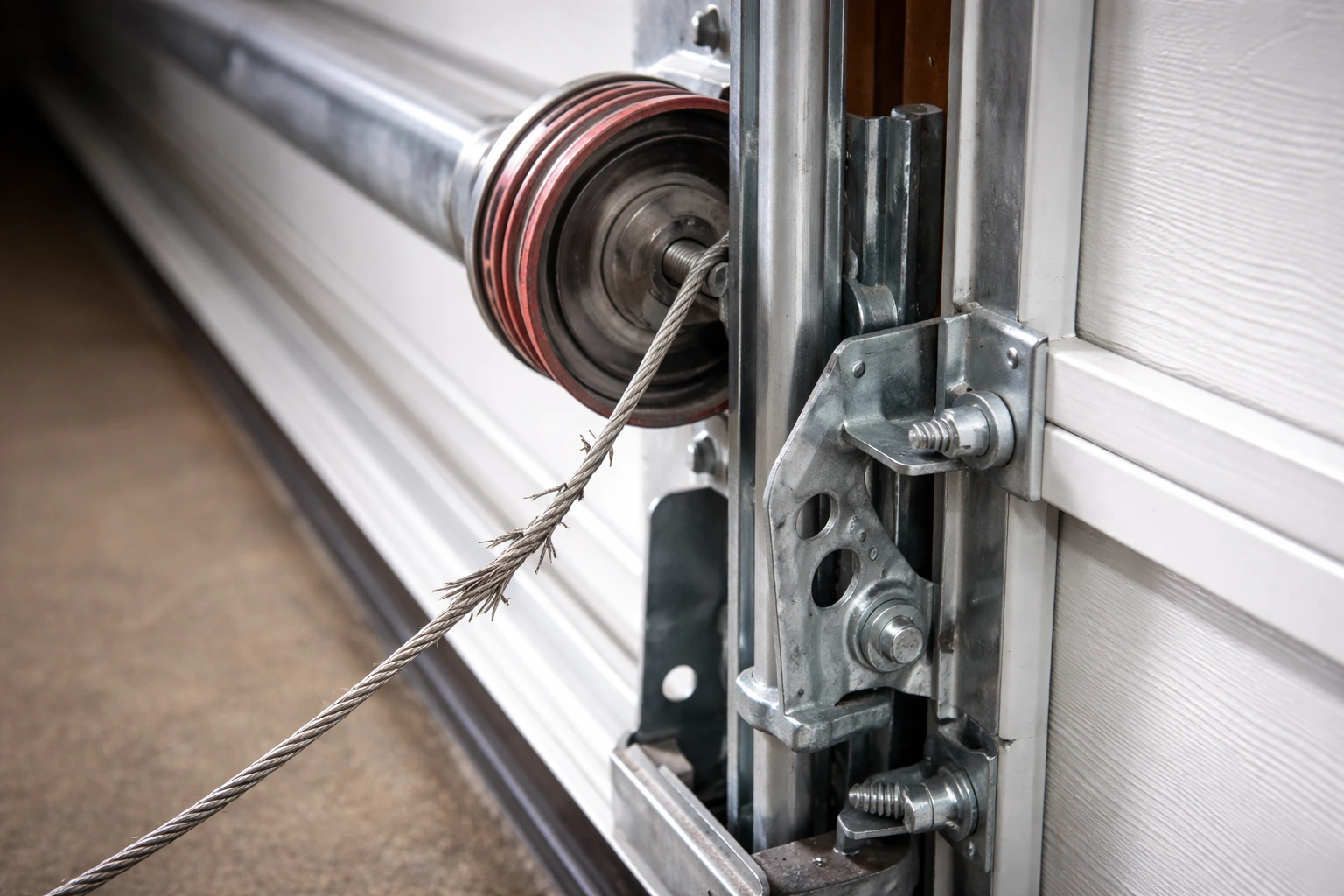
A garage door that suddenly looks uneven, becomes difficult to operate, or has a loose cable near the track may need garage door cable repair. Cables are an important part of many garage door lifting systems because they work with the counterbalance system to help control the movement and weight of the door.
When a cable becomes worn, loose, or damaged, normal operation can change quickly. Continuing to use the door may also place additional strain on springs, tracks, rollers, and other components.
If your garage door is showing mechanical problems, Door-O-Matic provides professional Garage Door Repair Services for homeowners who need the system inspected and repaired.
How Garage Door Cables Work
Garage door cables are part of the system that helps raise and lower the door in a controlled way.
Depending on the system, cables work with torsion springs, extension springs, drums, and other counterbalance components. The ANSI/DASMA 110-2025 Standard for Lifting Cables describes lifting cables as integral components of counterbalance systems for residential, commercial, and industrial sectional doors. Review the ANSI/DASMA lifting cable standard.
In simple terms, the springs help counterbalance the weight while the cables help transfer that force to the moving door.
Because these components work together, a problem with one cable can affect how the entire system moves.
Signs Garage Door Cable Repair May Be Needed
Cable problems often create noticeable changes in garage door operation.
The Door & Access Systems Manufacturers Association recommends visually inspecting the cables connected to the spring system. DASMA warns that frayed or worn cables may be at risk of breaking and should be replaced by a trained technician because of the high tension involved.
Common warning signs can include:
- Visible fraying or damaged cable strands
- A cable hanging loose near the track
- Uneven opening or closing
- One side of the garage door sitting lower than the other
- Sudden difficulty lifting the door
- A door becoming stuck partway
- A cable that has completely separated or snapped
These symptoms can also overlap with spring, track, or hardware problems. A professional inspection helps identify the actual source.
Why a Loose Cable Can Make the Door Uneven
A garage door should remain relatively level as it travels.
When one cable loses tension or moves out of its normal position, the two sides of the door may no longer move evenly. One corner can rise while the opposite side remains lower.
The result may look like a crooked or tilted garage door.
However, cable tension is only one possible cause. Springs, drums, tracks, rollers, and brackets also influence door movement. That is why putting a loose cable back into position without diagnosing the system may not correct the underlying problem.
Door-O-Matic’s Garage Door Repair Services are designed for professional evaluation of garage door problems rather than relying only on the most visible symptom.
What Happens When a Garage Door Cable Breaks?
A broken cable can immediately change how the garage door operates.
One side of the door may lose part of its lifting support. The door can become uneven, difficult to move, or unable to complete its normal opening or closing cycle.
The opener may still attempt to move the door, but repeatedly activating it is not a good way to compensate for a damaged lifting system.
DASMA specifically advises homeowners to visually inspect cables for fraying or wear and states that cables connected to high-tension spring systems should be replaced by trained technicians. DASMA’s garage door safety guidance provides additional information about these components.
If a cable has visibly snapped, stop operating the door until the system has been evaluated.
Frayed Garage Door Cables Should Not Be Ignored
A cable does not have to break completely before it becomes a concern.
Individual wire strands can begin to fray. Corrosion or repeated movement may also affect cable condition over time.
The ANSI/DASMA lifting cable standard addresses characteristics such as strength, flexibility, durability, and safety for sectional-door lifting cables. This highlights why cable condition matters even before complete failure occurs.
A homeowner can visually observe the cables without touching them. If deterioration is visible, the next step should be professional inspection rather than adjustment.
Cable Problems and Spring Problems Can Look Similar
Springs and cables are closely connected in many garage door systems.
A door may feel unusually heavy because a spring has failed. It may become crooked because of a cable problem. In some situations, more than one component may need attention.
This overlap makes diagnosis important.
The U.S. Consumer Product Safety Commission recommends professional service when a garage door becomes severely unbalanced, binds, or sticks. Its safety guidance also emphasizes checking springs, hardware, and fittings.
Instead of assuming that the cable is the only problem, a technician can inspect the complete lifting and counterbalance system.
Why You Should Avoid Using a Door With a Broken Cable
A garage door opener is intended to operate a functioning, properly balanced door.
It should not be relied on to compensate for a broken cable or another major mechanical failure.
Continuing to operate an uneven door may increase stress on:
- Springs
- Rollers
- Tracks
- Cable drums
- Brackets
- Opener components
If the door is visibly crooked, stuck, or supported unevenly, stop cycling it until it can be inspected.
For broader information about professional garage door repairs and why mechanical issues should be addressed properly, homeowners can also read Door-O-Matic’s existing guide on why professional garage door repair matters for safety.
Garage Door Cable Repair Is Not a DIY Adjustment
A cable hanging beside the track may appear easy to reposition. The lifting system is more complex than it looks.
Cables can be connected to springs and brackets that operate under substantial tension. Improper adjustment can release stored mechanical energy unexpectedly.
DASMA specifically warns that garage door cables associated with spring systems should be replaced by trained technicians. Its garage door safety recommendations also caution homeowners about adjusting components connected to high spring tension.
Visual inspection is useful. Attempting to loosen brackets, adjust spring tension, or reinstall lifting cables is different and should be left to qualified service professionals.
What Should Be Checked During Garage Door Cable Repair?
Professional cable service should look beyond the damaged cable itself.
A technician may evaluate:
- Lifting cables
- Springs
- Cable drums
- Bottom brackets
- Tracks
- Rollers
- Door balance
- Fasteners and hardware
- Garage door opener performance
The objective is to understand why the cable became loose, frayed, or broken.
If another component contributed to the problem, correcting only the cable may leave the system operating improperly.
Preventive Maintenance Can Help Identify Wear Earlier
Garage door cables experience movement every time the door opens and closes.
Regular visual checks can help homeowners notice fraying, corrosion, unusual cable positioning, or changes in door movement before a complete failure occurs.
Preventive professional service can provide a more complete evaluation of cables, springs, rollers, tracks, and other components. Door-O-Matic offers Garage Door Maintenance Plans focused on equipment lifespan, safety, performance, and reliability.
DASMA also recommends routine garage door safety checks and professional attention when wear or abnormal operation is found.
Know When to Schedule Garage Door Cable Repair
Professional garage door cable repair should be considered when a cable is visibly frayed, loose, damaged, or broken.
A crooked door, uneven movement, sudden difficulty opening, or a door that becomes stuck can also indicate a problem somewhere in the lifting system.
The important step is identifying the cause before continuing to operate the door.
A professional inspection can determine whether the cable needs replacement and whether springs, drums, tracks, brackets, or other components also require attention.
If your garage door is uneven, stuck, or showing a visibly loose, frayed, or broken cable, avoid continuing to operate the system until it has been inspected.
Contact Door-O-Matic Garage Door Services to schedule professional garage door cable repair and determine whether the cable or another part of the lifting system needs service.
Have a question about your garage door?
Talk to an expertMore from the Door-O-Matic blog
Garage door panel replacement: when can you replace one section instead of the entire door?
Learn when garage door panel replacement may be an option and which key factors determine whether a single section or the entire door should be replaced.
Commercial garage door repair: common problems that can disrupt daily operations
Learn how professional commercial garage door repair can address common door problems that affect access, safety, deliveries, and daily business operations.